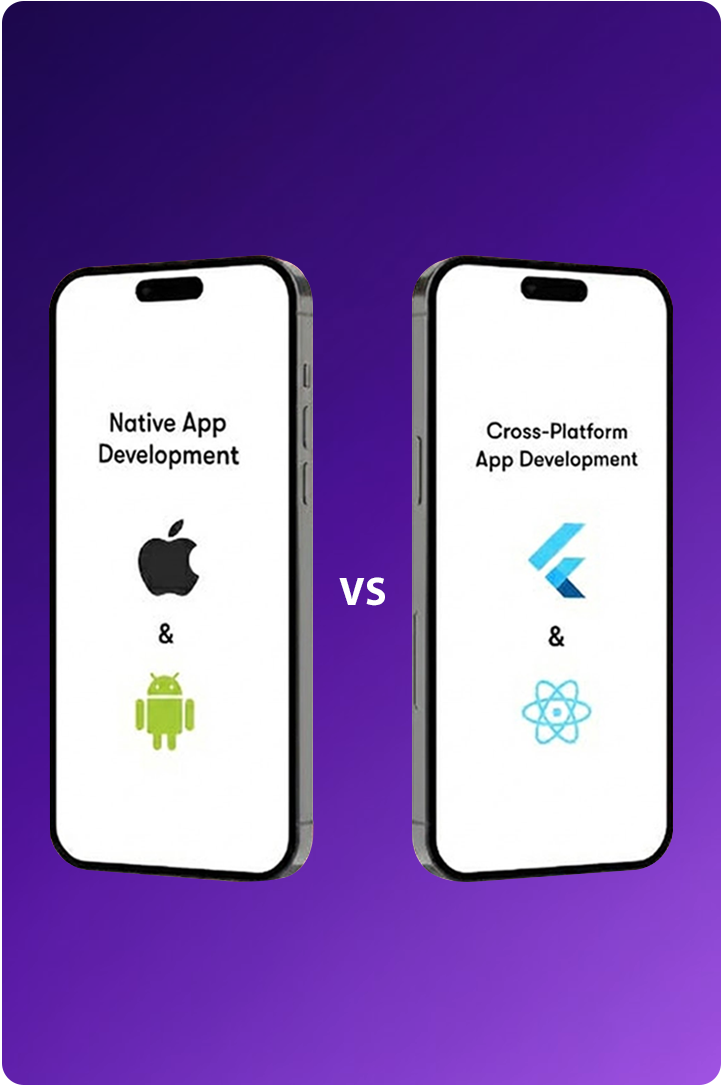

Native vs Cross-Platform Mobile App Development: What to Choose in 2026
8 min read
16 January 2026
By Aijaz Mughal
When you plan a mobile app, the first big question is which development approach fits best? Native vs cross-platform mobile development both come up often. Advantages and disadvantages vary for each development type. Your specific needs decide what works in 2026.
Not everyone realizes apps do not all build the same. Early choice matters to support your goals well, and key differences between native and cross-platform guide you on this. This leads to smart decisions for project and business aims.
Native Mobile App Development
Native mobile apps work on just one operating system, which may be Android or iOS. Developers use specific programming languages and tools for that platform, and in this way, they can use all the features the system offers fully.
For Android, developers use Java or Kotlin. Kotlin is getting more popular now because it has modern features and cleaner syntax. iOS apps built on Objective-C or Swift. Swift stands out with better performance and safety.
You see this in big apps like Google Maps, Pinterest, Spotify, and WhatsApp. These apps feel easy to use. They also connect well with phone features.
The Tools Behind Native Development
Android developers are able to use Android Studio or IntelliJ IDEA, and iOS developers can use Xcode or AppCode (only on macOS); these are the preferred tech stacks in 2026.
Benefits of Native Mobile Applications
Superior Performance: Native apps are compiled and optimized to run on their specific platform and provide an outstanding speed and responsiveness. They are also faster, use less battery, and offer little lag since they do not have any extra abstraction layers to access the core programming language and APIs of the platform.
Advanced Security: Native apps provide a high level of security because of platform-specific security features, and because of this, their usage in banking, healthcare, government, and fintech applications is preferred as they implement advanced encryption, secure data storage, biometric authentication, and fraud detection capabilities.
Refined User Interface: Native apps take on the OS interfaces and design patterns of the device, and generate familiar experiences. These apps are designed to be natural and consistent by following the platform-specific design principles, which decrease the learning curve and improve user satisfaction.
Full Access to the Device: The ability to access all the features of the device is what makes native apps unique, be it a camera with GPS and push notifications or an AR platform and hardware-specific features such as Face ID, which allow users to have a rich and integrated experience.
On-the-fly Platform Updates: Direct access to new SDKs keeps apps up to date and competitive as new features are introduced by Apple or Google.
Problems of Native Development
Increased Development Costs Android and iOS apps would need different teams with platform-specific knowledge, which raises staffing costs and resource needs.
Long Development Cycles. Multiple platform development increases time to market. Every platform will have its development cycle, testing period, and maintenance plan.
Poor Code Reusability Business logic and features should be developed on a platform-by-platform basis, which doubles the effort and multiplies the possible inconsistencies between versions.
Cross-Platform Mobile App Development
Cross-platform development allows the development of apps based on a single codebase that can be executed on various OS to achieve maximum efficiency and maintain wide compatibility.
React Native by Meta (JavaScript), Flutter by Google (Dart), and .NET MAUI by Microsoft (C# and XAML) are all popular frameworks, and these frameworks bundle apps to use native UI components but offer a single API to access platform features.
The most visible examples are Instagram and Skype (React Native), Google Ads and The New York Times (Flutter), as well as The World Bank (.NET MAUI).
To learn more about best practices and the strategies of cross-platform development, see our complete guide to cross-platform app development.
Cross-Platform Development Tools
Cross-platform frameworks need platform-specific SDKs to be deployed. Android development is compatible with Windows, macOS, and Linux, whereas iOS development is compatible with macOS only. Popular IDEs are Visual Studio Code, Android Studio, WebStorm, and IntelliJ.
Advantages of Cross-Platform Development
Lower Development Costs: A single development team can build apps across multiple platforms at the same time, which saves a lot of staffing costs, and you also do not need to have Android and iOS teams separately, which simplifies communication as well as saves overhead costs.
Quick Time to Market: Code reusability allows faster launches and faster iterations. Instant launch of such apps on different platforms creates a competitive edge, especially in the case of startups that are trying new ideas.
Code Reusability and Consistency: A unified codebase provides functionality and business logic with consistency across multiple platforms. Version discrepancies got removed when they were deployed on all platforms.
Simplified Maintenance: The Cost of maintenance and complexity is reduced to a greater extent by using the single codebase approach. Updates, bug fixes, and features only need to be coded once, which saves testing load and ensures that all users get the same benefits.
Disadvantages of Cross-Platform Apps
Bigger App Size: Cross-platform apps include framework runtimes and other libraries, which make them bigger downloads, which can affect user acquisition, particularly in low-connectivity areas.
Performance Overhead: The performance overhead can be added by the abstraction layer. Although the current frameworks have become much better, applications might not perform as well as native applications when it comes to compute-intensive work or complicated animations.
Minimal Platform-Specific Features: Not every platform feature is immediately available. High-level hardware integrations or state-of-the-art features may require native coding language expertise.
Slow Adoption of New Features. When operating systems add new features, cross-platform frameworks have to be updated first, which introduces delays that can place apps at a disadvantage to their native counterparts.
Native vs Cross-Platform: Major Decision Factors
When evaluating mobile development native vs cross platform options, you must consider your project's specific needs:
Time to Market Requirements
In the cross platform vs native mobile development debate, timing plays a crucial role. Cross-platform development allows quick prototyping and quicker market penetration, which is best suited to startups and new product releases. Native app development generates better apps, but takes longer to develop platforms separately.
Security and Compliance Requirements
Native development is advantageous to applications that process sensitive information, such as financial transactions, medical records, or personal information, as it is highly integrated with platform-specific security capabilities, such as hardware-supported encryption and sophisticated biometric authentication.
Performance Requirements
Performance-intensive applications like games, augmented reality experiences, or real-time data processing benefit from native app vs cross platform comparison, where native development's direct hardware access and optimized integration provide clear advantages. Cross-platform frameworks are suitable for typical business applications but add overhead that may affect high-performance applications.
Budget Constraints
When comparing cross platform mobile app development vs native approaches, budget considerations are significant. Cross-platform development provides a low-cost entry point and smaller development teams, and lower maintenance costs. Native vs cross platform mobile app development costs differ substantially, with native demanding greater investment but delivering superior user experiences and better platform integration.
Long-Term Vision
Consider your app's future roadmap when deciding between native vs cross platform mobile development. Native development provides flexibility for deep platform integration and specialized features, while cross platform app development vs native works well for stable feature sets and standard functionality requirements.
Collaboration with a Mobile App Development Company
A good mobile app development company can change your project's success a lot, no matter if you pick a native vs cross platform development path. Expert teams know technical skills and industry skills well; they also follow high security standards and best practices, so all this matches your business goals with app plans.
You can find a trusted mobile app development company in Dubai that looks at your needs first, then suggests the best approach for you. They maintain a good balance in performance, cost of the app, feasibility, and time to market because such companies understand platform details, new technologies that work, as well as the right industry practices. This helps your app do well in a tough market.
FAQs
Q.1 Is native app development better than cross-platform for performance?
Yes, native apps tend to be faster and more efficient as they are designed to work on a single platform.
Q.2 Why do many developers choose cross-platform frameworks like Flutter or React Native?
This approach allows the development of both Android and iOS apps at the same time, and this saves time and money.
Q.3 Can a cross-platform app feel as good as a native app?
In some cases, cross-platform apps may appear to be native apps with the use of modern tools, which are not always ideal.
Q.4 Does Apple or Google prefer native apps over cross-platform ones?
Some developers believe that native apps receive higher ratings and more opportunities to feature as they are compatible with the platform design.
Q.5 When should I choose native over cross-platform development?
Select native when you want the optimum speed, complete access to device capabilities, and platform-specific tools.
Author
Aijaz Mughal is a digital marketing strategist, business growth advisor and Founder & Managing Director of Aun Digital. With more than 15 years of experience in the UAE market, he has worked across SEO, PPC, performance marketing, digital strategy, social media, project management and team leadership.Throughout his career, Aijaz has worked with leading brands including Emaar, Masdar, Honda, Leejam, Unilever, The Dubai Mall, Emerson, Moorfields and Yamaha, helping businesses develop effective digital strategies and achieve measurable growth.
Speak to an Expert